ListIQ / B2B tools · AI-assisted UX
Better listings.
Clearer next steps.
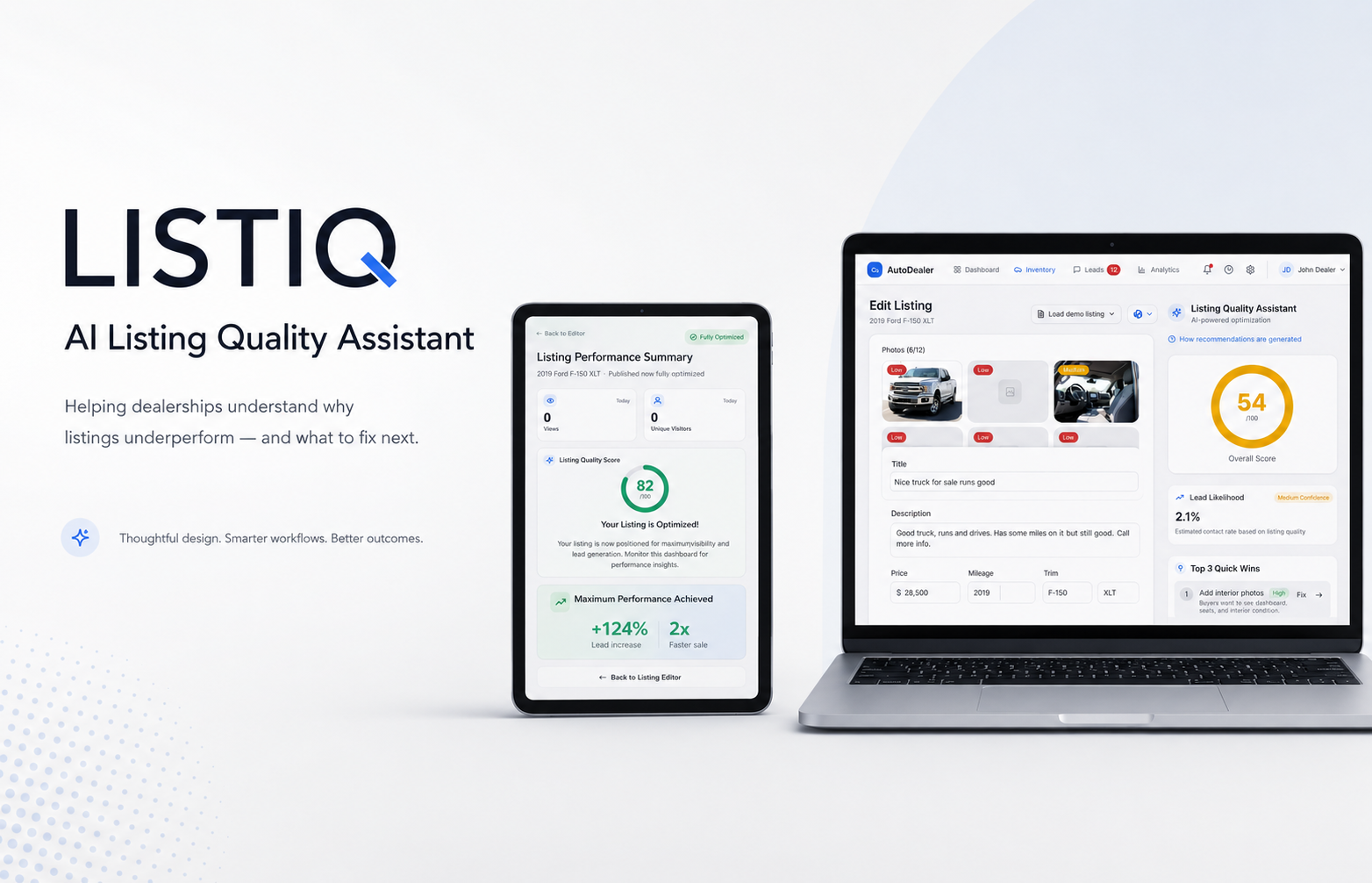
A listing-quality assistant that helps dealers understand what needs attention, why it matters and what to do next.
- ROLE
- Product concept · UX/UI · Prototyping
- FOCUS
- AI guidance, explainability + trust
- DELIVERABLES
- Listing editor + quality dashboard
- FORMAT
- Interactive web prototype on Vercel
AT A GLANCE
- The problem
- Dealers publish thin listings (“Nice truck for sale runs good”) and have no way to tell which fixes would actually help buyers.
- My role
- Product concept, UX/UI design and the interactive prototype.
- What I built
- An AI assistant inside the listing editor: a live quality score, ranked quick wins, and a preview of the improved listing before it’s published.
- Key decision
- Embed the AI in the workflow the dealer already uses, and make every suggestion explain itself. The dealer stays in control of every change.
- Skills shown
- AI UX · B2B workflow design · Dashboard design · Prototyping
Self-initiated concept. Scores, lead likelihood and uplift figures in the prototype are placeholders that show the experience; they are not measured outcomes.
01 / THE PROBLEM
A listing is the buyer’s first impression.
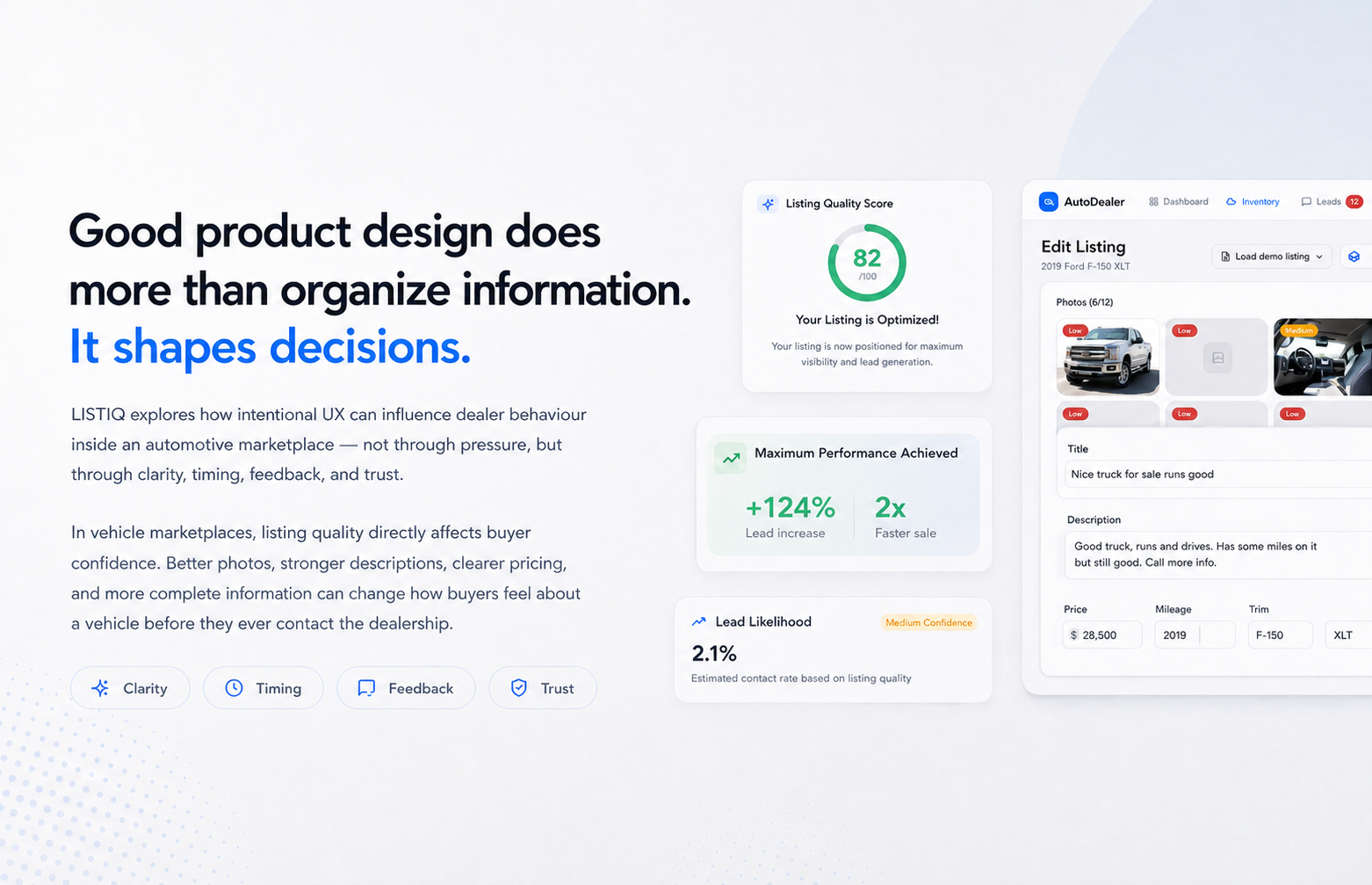
In a vehicle marketplace, the listing does the selling before a buyer ever calls. Better photos, a specific title, a useful description and realistic pricing all change how confident a buyer feels.
But dealers listing dozens of cars a week rarely get feedback beyond “views went down”. The typical result: one exterior photo, a vague title and a price that’s out of step with the market.
02 / DESIGN PRINCIPLES
Shape behaviour through clarity, not pressure.
The goal wasn’t another analytics dashboard. It was to influence what dealers do at the moment they’re editing, using four levers:
Clarity
Say exactly what to change, in plain language.
Timing
Give feedback while the listing is being written, not after it underperforms.
Feedback
Show the effect of each change straight away.
Trust
Explain the reasoning so the dealer believes the suggestion.
03 / FROM SCORE TO NEXT STEP
A task becomes a coaching moment.
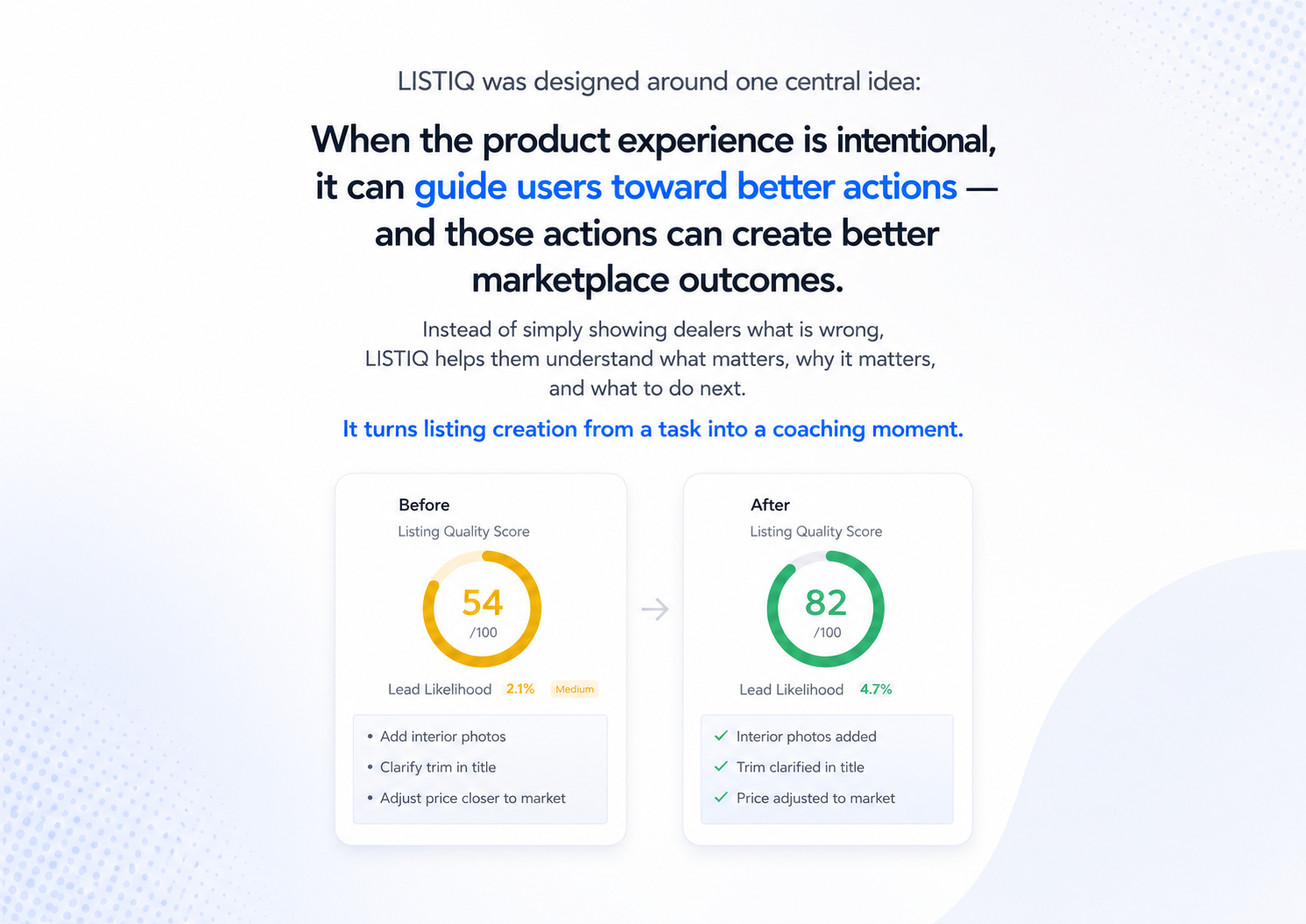
A score on its own just tells a dealer they’re doing badly. ListIQ pairs it with the three changes that matter most for this specific listing:
- Add interior photos: buyers want to see the dashboard, seats and condition.
- Clarify the trim in the title so serious buyers find it.
- Adjust the price closer to similar listings in the market.
Once applied, the dealer sees the listing move from 54 to 82 before publishing.
04 / WORKFLOW
AI that lives inside the editor.
If the assistant is a separate tool, dealers have to remember to use it. So I designed it into the existing listing flow:
- Create or edit a vehicle listing
- Receive a real-time quality score
- Review AI-generated recommendations
- Understand why each one matters
- Apply quick wins
- Preview the score and lead likelihood change
- Publish with more confidence
- Monitor performance after publishing
05 / DESIGNING FOR TRUST IN AI
Every suggestion has to explain itself.
The hardest part wasn’t the dashboard. It was designing a system that could earn a dealer’s trust. These decisions are built into the prototype:
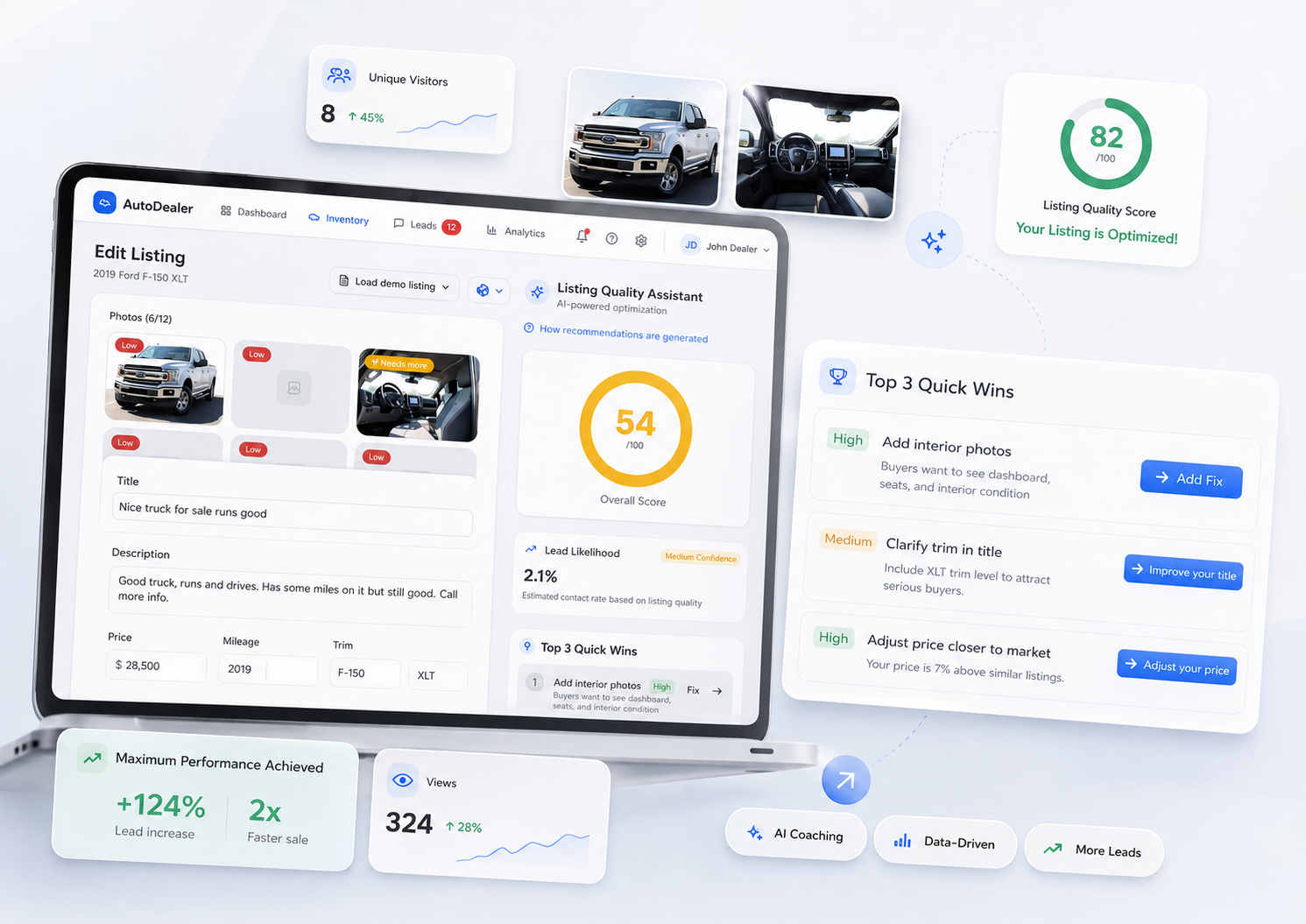
- Reasons, not orders. Each quick win carries its “why”: “Your price is 7% above similar listings,” not just “Lower price.”
- Confidence is visible. Predictions like lead likelihood are labelled with a confidence level (e.g. “Medium confidence”) instead of being shown as certain.
- Priority is explicit. High and Medium impact badges tell dealers where to spend limited time.
- The method is one click away. A “How recommendations are generated” link sits right under the assistant’s header.
- The dealer decides. Nothing changes until the dealer applies a fix. The AI suggests; the human publishes.
06 / VISUAL DIRECTION
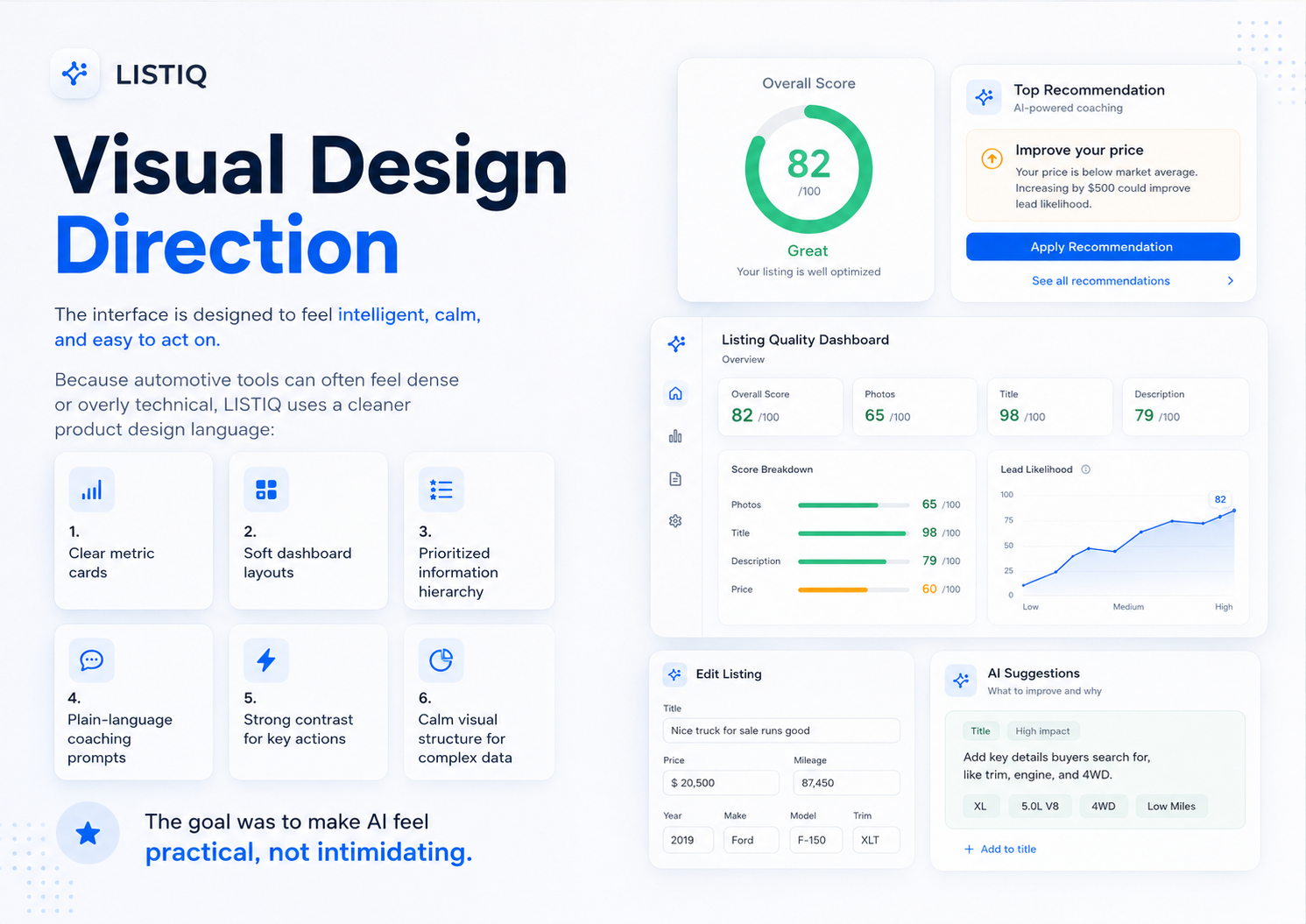
Make AI feel practical, not intimidating.
Automotive dealer tools are usually dense and technical. ListIQ uses clear metric cards, soft layouts, strong contrast on the one action that matters, and coaching written in plain language.
07 / WHAT I’D DESIGN AND TEST NEXT
The questions an AI product has to answer.
- When the AI is wrong: let dealers dismiss a suggestion with a reason, and use that feedback to improve future recommendations.
- When data is thin: how confidence is calculated and shown for rare vehicles or new markets.
- Gaming the score: make sure a high score reflects a genuinely better listing, not keyword stuffing.
- Real dealers: watch three to five dealers list a car with and without the assistant, and measure time-to-publish and which suggestions they accept.
08 / REFLECTION
Designing AI for clarity, trust and action.
The assistant shouldn’t just do things for the user. It should help them understand what’s happening, why it matters and how to make a better decision. That shift, from automation to explanation, is what I’d carry into any AI product.
TAKE A CLOSER LOOK
Explore the experience.
Open the prototype, load the demo listing and apply the quick wins to see the score change. Data is illustrative.